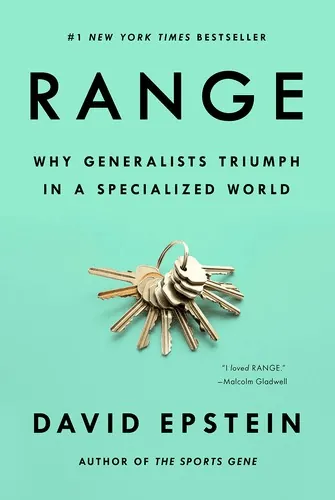
Range: Why Generalists Triumph in a Specialized World
Listen to it free. Get Range on Audible with a 30-day trial — cancel anytime.
Start listening freeon AudibleNew members only · many titles are included with the membership. As an Amazon Associate, Read Stacks earns from qualifying purchases and membership trials at no extra cost to you.
What this book is, and who it's for
David Epstein's 2019 book is the explicit counterpoint to the Tiger Woods early-specialization narrative. Epstein gathers evidence from across sports, science, business, music, and education to make the case that in most domains — what learning researchers call 'wicked' environments — generalists with broad sampling outperform specialists with deep early commitment. The cult of the head start, he argues, produces narrow experts who break when conditions shift; the longer sampling period produces analogical thinkers who adapt. Read this after Outliers (which the book is partly arguing with) and pair it with Mindset and Drive to triangulate what actually predicts long-run mastery: not innate talent, not early commitment, but the willingness to sample widely, struggle productively, and commit late enough that the commitment matches the person.
Breadth of experience across multiple unrelated domains. Epstein's research links it to analogical thinking and novel problem-solving — the meta-skill that makes generalists win in domains the specialist's deep training cannot anticipate.
How to apply Range in 3 steps
- 1Sample broadly before committing
For young careers (and surprisingly often for established ones), Epstein's research is clear: deliberately sample across multiple unrelated domains before specializing. The sampling produces the analogical-thinking range that specialists never develop.
- 2Cultivate adjacent expertise alongside core work
Pick one domain unrelated to your main work and invest weekly in learning it — could be a language, an art, a craft, a different field. The cross-domain mental hooks pay off in your main work in ways direct study cannot replicate.
- 3Match your problem to the right thinker
Specialists excel in kind environments (chess, classical music, narrow domain expertise). Generalists excel in wicked environments (most modern strategic and creative work). When facing a wicked problem, seek range-thinkers, not deepest-expert-in-the-narrow-niche.
Chapters
- Chapter 1The Cult of the Head Start1.5 min
- Chapter 2How the Wicked World Was Made1.5 min
- Chapter 3When Less of the Same Is More1.5 min
- Chapter 4Learning, Fast and Slow1.5 min
- Chapter 5Thinking Outside Experience1.5 min
- Chapter 6The Trouble with Too Much Grit1.5 min
- Chapter 7Flirting With Your Possible Selves1.5 min
- Chapter 8The Outsider Advantage1.5 min
- Chapter 9Lateral Thinking with Withered Technology1.5 min
- Chapter 10Fooled by Expertise1.5 min
How to read this book. Each chapter is a ~30-second summary — the core insight, no filler. Open the chapters that grab you. If the book resonates, hear the full audiobook free with an Audible trial or buy the edition on Amazon (links below, affiliate-disclosed).
Range pairs well with
A single book is an argument. A stack is a curriculum. Range appears in this curated reading path — each pairs it with other books that sharpen its ideas, in a suggested reading order.
More books like Range
The other books in the curated reading paths Range belongs to. Each one sharpens, extends, or counter-argues something Range establishes — the compound is the reason these books sit together in a stack.
- Think clearlyThinking, Fast and SlowDaniel Kahneman
- Think clearlyPrinciplesRay Dalio
- Think clearlyOutliersMalcolm Gladwell
- Think clearlyMindsetCarol S. Dweck
- Think clearlyDriveDaniel H. Pink
- Think clearlyQuietSusan Cain
- Think clearlyThe Psychology of MoneyMorgan Housel
- Think clearlyPredictably IrrationalDan Ariely
Frequently asked questions
What is Range about?+
David Epstein's 2019 book is the explicit counterpoint to the Tiger Woods early-specialization narrative.
How long does it take to read Range?+
The full Range typically takes 4-6 hours to read cover-to-cover. The Read Stacks chapter summaries cover the same ideas in ~16.5 minutes total (10 chapters at ~30 seconds each).
Who is Range for?+
Range is widely regarded as essential reading in its field. The Read Stacks summary is the fastest way to decide if the full book is worth your time before committing to it.
What are the key ideas in Range?+
The book covers The Cult of the Head Start, How the Wicked World Was Made, When Less of the Same Is More, Learning, Fast and Slow and Thinking Outside Experience. Each chapter has a free summary on Read Stacks (~30 seconds each).
Is Range worth reading?+
If you're interested in cognitive bias and clearer decision-making, Range is widely considered essential. The Read Stacks chapter summaries help you decide — read the free first chapter, then buy the full book on Amazon if the argument resonates.
Books like Range
If Range resonated, these non-fiction books pick up the same threads.
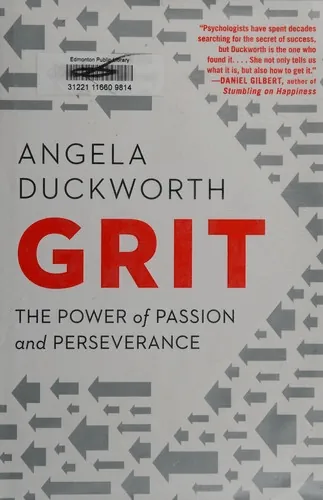
From Read Stacks · Learn
How to get more out of this book
Two short essays on the meta-skill — what chapter summaries actually preserve, and the six retention techniques that decide whether what you read here is still useful six months from now.
- Are book summaries actually useful, or am I just cheating?
Chapter summaries are a navigation tool, not a substitute. Used right, they help you read more books fully — by helping you avoid the wrong ones. Used wrong, they're a comfort blanket that lets you feel like you're reading without engaging with the material.
6 min read
- I read a lot of books but can't remember anything. What works?
Forgetting most of what you read is normal, not a personal failing — your brain wasn't designed to retain prose at the rate modern readers consume it. The practices that DO work share one thing: they force you to USE the material instead of just consuming it. Six specific techniques, each tested across decades.
7 min read
Appears in these topics
Range is part of 3 curated reading lists — each a “best books on X” cluster with a synthesis on how the books fit together.
Want one curated stack a week in your inbox? Subscribe to the free weekly stack →