Lead with growth
Four books on the engine that distinguishes operators who improve from those who repeat — psychology, motivation, habits of effectiveness, and the discipline of testing.
Listen to it free. Many of these books are on Audible — hear them free with a trial.
Start listening freeon AudibleNew members only · many titles are included with the membership. As an Amazon Associate, Read Stacks earns from qualifying purchases and membership trials at no extra cost to you.
Most people don't fail at work because they lack talent. They fail because the engine they're running on cannot grow — fixed mindset, the wrong motivators, the absence of a personal-effectiveness operating system, and a default of opinions instead of experiments. The four books in this stack each repair a different part of that engine. Carol Dweck names the foundation: which mindset are you actually running? Daniel Pink replaces the carrot-and-stick with what genuinely sustains effort over years. Stephen Covey supplies the daily operating system that makes growth show up in behaviour, not just intention. Eric Ries closes the stack with the discipline that turns growth from a personal trait into a team capability — running the right experiment, killing the wrong assumption, shipping the next iteration. Read in order, the four books rebuild the engine from psychology up to organisation out.
The reading order
Each step below is one book. Click through to its chapter summaries — or read straight through the stack from top to bottom.
 1Step 1 · 8 chapters · 14.5 min
Mindset
by Carol S. Dweck
Start with Carol Dweck because the diagnosis comes first. The fixed-vs-growth mindset distinction is the one piece of psychological vocabulary you cannot afford to skip. Once you can name which mindset is firing in a specific situation — your reaction to feedback, your treatment of your own kids, the way you praise a teammate — every subsequent layer of growth has somewhere to land. Without this foundation, the rest of the stack reads as good advice that doesn't stick.
 2Step 2 · 9 chapters · 16 min
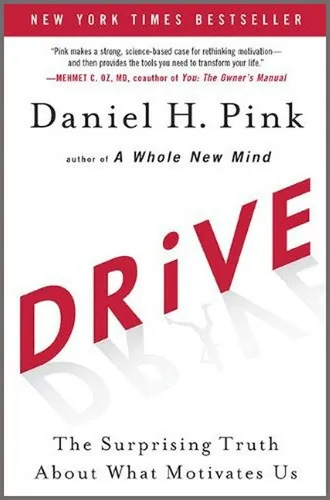
Drive
by Daniel H. Pink
Daniel Pink picks up where Dweck leaves off and asks the next obvious question: if growth is possible, what actually sustains it? His answer — autonomy, mastery, purpose — is the operating principle that explains why most workplace motivation systems fail and what the alternative looks like. Read after Mindset, Drive shows what to BUILD INTO your environment so the growth mindset has fuel, not just permission.
 3Step 3 · 10 chapters · 17 min
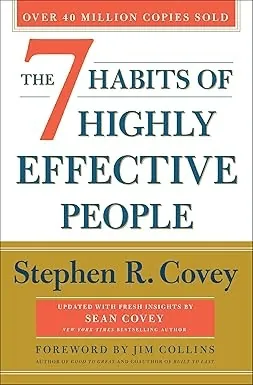
The 7 Habits of Highly Effective People
by Stephen R. Covey
Stephen Covey converts the first two books into a daily operating system. His seven habits aren't a productivity hack; they're a behavioural framework that compounds character. Begin with the end in mind. First things first. Think win-win. Seek first to understand. Read after Mindset + Drive, the seven habits become the visible expression of a growth-oriented, intrinsically-motivated operator over months and years.
 4Step 4 · 10 chapters · 17.5 min
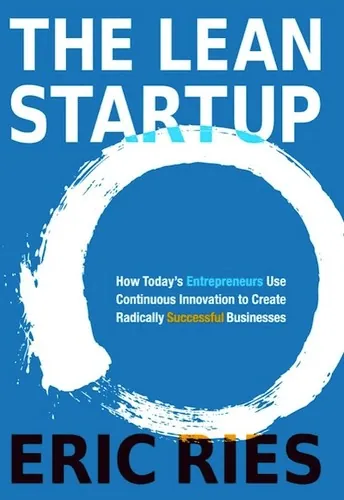
The Lean Startup
by Eric Ries
Eric Ries closes the stack by scaling growth from individual to organisation. The build-measure-learn loop is the engineering version of Dweck's mindset: don't argue, EXPERIMENT. The Lean Startup converts personal growth-orientation into a team capability: short cycles, validated learning, pivot-or-persevere decisions made on evidence. Read after the first three, Ries is what stops you from running the growth engine alone — and starts running it through a company.
Stack synthesis
The four books form one engine in four parts. Dweck (psychology): is the growth mindset in place? Pink (motivation): is the environment supplying autonomy, mastery, purpose? Covey (behaviour): are the daily habits compounding effectiveness? Ries (system): are the experiments running fast enough to learn? Missing any one of the four, the engine stalls — growth-minded operators with the wrong motivators burn out; well-motivated operators without effectiveness habits don't ship; effective operators without experimentation patterns optimise the wrong things. The Monday-morning move from the whole stack: name one fixed-mindset response you'd most want to change (Dweck), one daily habit you'd want to add (Covey), one experiment you'd want to run on your work this week (Ries), and one motivator (autonomy, mastery, or purpose) that's been missing from your current setup (Pink). One concrete action per book. That's the install.
Frequently asked questions
What books are in the Lead with growth stack?+
The Lead with growth stack has 4 books: Mindset, Drive, The 7 Habits of Highly Effective People and The Lean Startup. Read them in the order listed below — each step builds on the one before it.
Who is the Lead with growth stack for?+
Four books on the engine that distinguishes operators who improve from those who repeat — psychology, motivation, habits of effectiveness, and the discipline of testing. It's for readers who want the full argument, not just one book's take on it — the stack works because each book adds a piece the others don't cover.
How long does the Lead with growth stack take to read?+
The 4 full books typically take 16+ hours combined. Read Stacks' chapter summaries cover the same stack in about 65 minutes total, so you can preview the whole path before committing to any one book.
What order should I read the Lead with growth stack in?+
In this order: 1. Mindset, 2. Drive, 3. The 7 Habits of Highly Effective People, 4. The Lean Startup. The sequence matters — each book's summary links back to the ones before it, so reading out of order will make some references land less clearly.
What's the big idea behind the Lead with growth stack?+
The four books form one engine in four parts.
Adjacent stacks
From Read Stacks · Learn
Get the most out of a multi-book stack
A stack only works if the ideas stick across all the books in it. These two essays cover the retention practices and pile-management discipline that make a stack actually compound.
- I read a lot of books but can't remember anything. What works?
Forgetting most of what you read is normal, not a personal failing — your brain wasn't designed to retain prose at the rate modern readers consume it. The practices that DO work share one thing: they force you to USE the material instead of just consuming it. Six specific techniques, each tested across decades.
7 min read
- Why do I keep buying books I never finish?
Most non-fiction readers buy 5-15 books per year and finish 2-3. The pile is not laziness — it's a navigation failure. Four specific reasons the system fails and four specific fixes, including how to use curated reading stacks to avoid the bad-purchase loop.
5 min read
Want one curated stack a week in your inbox? Subscribe to the free weekly stack →