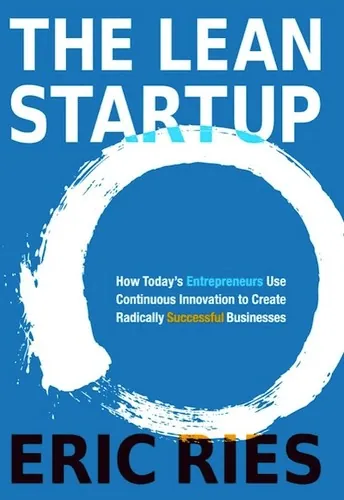
The Lean Startup
by Eric Ries
Listen to it free. Get The Lean Startup on Audible with a 30-day trial — cancel anytime.
Start listening freeon AudibleNew members only · many titles are included with the membership. As an Amazon Associate, Read Stacks earns from qualifying purchases and membership trials at no extra cost to you.
What this book is, and who it's for
Eric Ries's 2011 framework distilled startup methodology from a romantic-mythological art into a disciplined practice with measurable outputs. The core engine — Build, Measure, Learn — is the antidote to the most expensive failure mode in entrepreneurship: building products no one wants because the founders assumed their intuition was enough. Ries's argument, drawing on lean manufacturing (Toyota Production System) and customer development (Steve Blank), is that a startup is best understood as an experiment under deep uncertainty, and that validated learning is the only early-stage output that matters. The book operationalizes this through specific techniques: the MVP, innovation accounting, the pivot, small-batch development, and the three engines of growth. Read this as the foundational text underneath every modern startup playbook; the framework has held up for a decade and a half because it works.
Chapters
- Chapter 1Start1.5 min
- Chapter 2Define & Learn2 min
- Chapter 3Experiment & MVP1.5 min
- Chapter 4Leap of Faith1.5 min
- Chapter 5Innovation Accounting1.5 min
- Chapter 6Pivot or Persevere2 min
- Chapter 7Small Batches2 min
- Chapter 8Engines of Growth2 min
- Chapter 9Adapt: Building the Lean Organization2 min
- Chapter 10Innovate2 min
How to read this book. Each chapter is a ~30-second summary — the core insight, no filler. Open the chapters that grab you. If the book resonates, hear the full audiobook free with an Audible trial or buy the edition on Amazon (links below, affiliate-disclosed).
The Lean Startup pairs well with
A single book is an argument. A stack is a curriculum. The Lean Startup appears in this curated reading path — each pairs it with other books that sharpen its ideas, in a suggested reading order.
More books like The Lean Startup
The other books in the curated reading paths The Lean Startup belongs to. Each one sharpens, extends, or counter-argues something The Lean Startup establishes — the compound is the reason these books sit together in a stack.
Frequently asked questions
What is The Lean Startup about?+
Eric Ries's 2011 framework distilled startup methodology from a romantic-mythological art into a disciplined practice with measurable outputs.
How long does it take to read The Lean Startup?+
The full The Lean Startup typically takes 4-6 hours to read cover-to-cover. The Read Stacks chapter summaries cover the same ideas in ~17.5 minutes total (10 chapters at ~30 seconds each).
Who is The Lean Startup for?+
The Lean Startup is written for founders, operators, and business leaders. The ideas apply across team sizes from solo to enterprise, with case examples drawn from Eric Ries's direct experience.
What are the key ideas in The Lean Startup?+
The book covers Start, Define & Learn, Experiment & MVP, Leap of Faith and Innovation Accounting. Each chapter has a free summary on Read Stacks (~30 seconds each).
Is The Lean Startup worth reading?+
If you're interested in startups and the operator mindset, The Lean Startup is widely considered essential. The Read Stacks chapter summaries help you decide — read the free first chapter, then buy the full book on Amazon if the argument resonates.
Books like The Lean Startup
If The Lean Startup resonated, these non-fiction books pick up the same threads.
From Read Stacks · Learn
How to get more out of this book
Two short essays on the meta-skill — what chapter summaries actually preserve, and the six retention techniques that decide whether what you read here is still useful six months from now.
- Are book summaries actually useful, or am I just cheating?
Chapter summaries are a navigation tool, not a substitute. Used right, they help you read more books fully — by helping you avoid the wrong ones. Used wrong, they're a comfort blanket that lets you feel like you're reading without engaging with the material.
6 min read
- I read a lot of books but can't remember anything. What works?
Forgetting most of what you read is normal, not a personal failing — your brain wasn't designed to retain prose at the rate modern readers consume it. The practices that DO work share one thing: they force you to USE the material instead of just consuming it. Six specific techniques, each tested across decades.
7 min read
Appears in these topics
The Lean Startup is part of this curated reading list — each a “best books on X” cluster with a synthesis on how the books fit together.
Want one curated stack a week in your inbox? Subscribe to the free weekly stack →